

What’s In This Guide
A business location can look ideal during a short tour and still create expensive problems after move-in. A visible storefront may lack convenient access. A low-cost warehouse may add time to every delivery. An attractive office may be difficult for employees or clients to reach during peak hours.
That is why an experienced commercial real estate agent goes beyond available listings. The agent helps compare how each location supports customers, employees, deliveries, staffing, visibility, and growth.
For businesses considering Newtown, Danbury, Brookfield, Bethel, and nearby communities, site selection analysis may include highway access, traffic patterns, nearby uses, customer demographics, parking, zoning and land-use regulations, and planned infrastructure improvements. The objective is to identify the location that best fits the business model, budget, operating requirements, and risk tolerance.
Quick Facts
- A commercial real estate agent should compare locations using both measurable data and on-the-ground market knowledge.
- I-84 access matters, but businesses should also evaluate local road connections, peak-hour congestion, parking, and delivery routes.
- Traffic counts, foot traffic, and customer demographics provide different insights and should not be treated as interchangeable.
- A structured location scorecard helps decision-makers compare sites consistently instead of relying on first impressions.
- Zoning, utilities, future development, and operational fit require property-specific due diligence before a lease or purchase.
Data Turns a “Good Location” Into a Business Decision
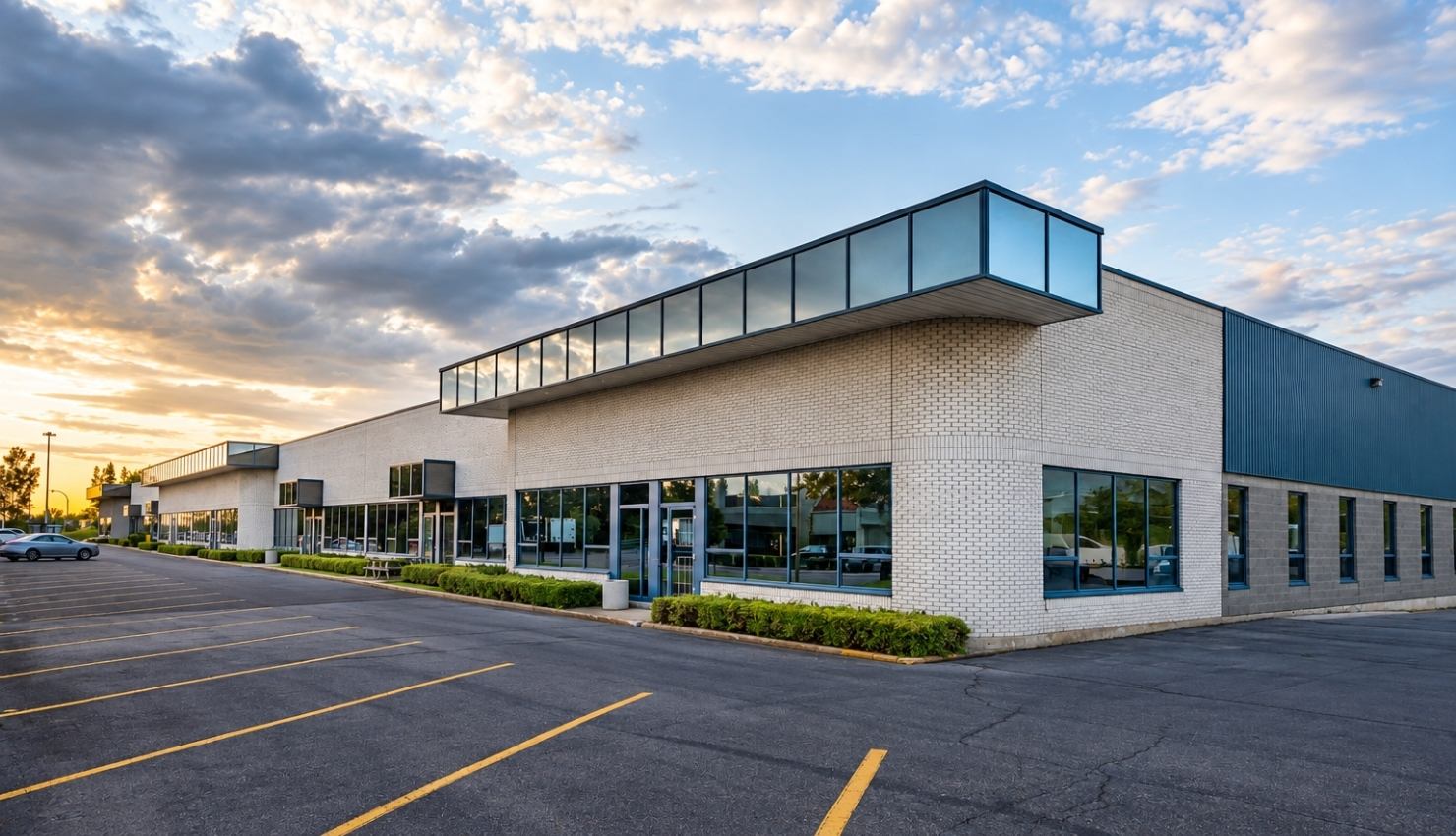
Commercial property decisions can involve substantial lease obligations, acquisition costs, build-out expenses, and relocation disruption. A location should be evaluated as a business asset, not simply as a building with the right square footage.
Data helps test assumptions. A retailer may favor the road with the highest vehicle volume, but drivers must also be able to see the building, enter safely, park, and match the target customer profile.
It’s important to combine location data, foot traffic data, trade-area information, and demographic data. These tools can reveal patterns, but they do not replace lease review, zoning confirmation, inspections, financial analysis, or local brokerage judgment.
What a Commercial Real Estate Agent Compares
Access to I-84 and Regional Routes
In the greater Danbury area, I-84 connects properties with New York, Waterbury, and other Connecticut markets, while Routes 6, 7, 25, and 34 shape local travel.
Distance to an interchange is only one factor. A broker should examine the full trip, including intersections, turns, congestion, grades, bridge clearances, and commercial-vehicle restrictions.
The Connecticut Department of Transportation reports recurring congestion on I-84 between Exits 3 and 7. A midday test drive may not represent a normal commute or delivery window.
Customer and Employee Convenience
A strong location reduces friction. Customers should be able to find the property, enter safely, park, and reach the correct suite. Employees need realistic commuting options, while delivery drivers need practical routes.
Convenience should be tested from multiple directions. A site may be easy to reach from Danbury but less practical from Newtown, Bethel, Brookfield, or New Milford. Even a property near an interchange may be less convenient if the final mile includes congested intersections or difficult turns.
Businesses should map employee ZIP codes, estimate drive times during actual shift changes, and consider whether the location expands or shrinks the available labor pool.
Traffic Counts and Foot Traffic
Traffic counts measure vehicles passing a point. Foot traffic data estimates visits or pedestrian activity. Both can be useful, but they answer different questions.
A roadside retailer may value high counts, visibility, and easy ingress and egress. A medical office may prioritize parking, accessibility, and nearby providers. An industrial user may focus on truck access, route reliability, and loading efficiency.
Counts also require context. They may cover both directions, include through traffic with little purchase intent, or come from a point that does not match the property entrance. Construction, school schedules, and seasonal patterns can affect activity. A broker should verify how people actually approach, see, and use the site.
Customer Demographics and Trade Area
Customer demographics help determine whether nearby households, workers, and visitors align with the target market. Relevant variables may include population, age, household income, daytime workforce, household composition, or industry concentration.
The U.S. Census Bureau estimated Danbury’s population at 89,033 as of July 1, 2025. Growth does not prove demand for a particular concept, but it provides context when combined with customer profiles and competitive analysis.
A trade area should reflect real travel behavior, not a simple circle. Highways, congestion, town boundaries, competing destinations, and shopping patterns affect willingness to travel. A Newtown business may draw from Danbury, Bethel, Brookfield, Monroe, Southbury, or other communities.
Visibility, Signage, Parking, and Site Access
Visibility is not the same as accessibility. A building can be easy to see but difficult to enter, or it may have convenient access with limited signage rights.
A location comparison should document:
- Visibility and signage from each direction
- Parking quantity, layout, and accessibility
- Curb cuts, turn lanes, and shared entrances
- Pickup, delivery, and fleet-vehicle conflicts
- Lighting, snow storage, and seasonal circulation
Parking should be evaluated based on operating demand, not only the stated space count. Employee parking, customer turnover, shared spaces, and peak-hour overlaps can change how well the site functions.
Nearby Businesses and Competitive Context
Neighboring businesses can generate demand, reinforce a district, or create conflicts. A medical user may benefit from proximity to related providers. A lunch concept may value nearby offices and schools. A contractor may prefer an industrial cluster with suppliers and service businesses.
The commercial real estate agent should identify competitors, complementary uses, major employers, planned projects, and potential tenant turnover. Nearby uses may also create parking pressure, delivery conflicts, noise, odors, or incompatible customer patterns.
Zoning, Utilities, and Future Growth
A promising location is not viable if the use is prohibited or requires approvals that conflict with the client’s schedule. Zoning, special exceptions, signage, parking requirements, wetlands, septic capacity, utilities, and building-code issues can affect feasibility.
The Town of Newtown Land Use Department performs pre-application reviews, reviews commercial development applications, and conducts new-business use and location assessments. Early contact with officials can identify procedural requirements, but businesses should still obtain property-specific legal, engineering, environmental, financial, and construction advice.
A broker should also review planned road work, development projects, zoning changes, and infrastructure improvements. Plans can change, so potential improvements are due diligence considerations, not guaranteed benefits.
How to Compare Commercial Locations in Seven Steps

1. Define the Business Requirements
List the nonnegotiable requirements first: property type, size, budget, zoning, parking, utilities, ceiling height, loading access, customer access, signage, and target move-in date.
2. Map Customers, Employees, and Deliveries
Use customer addresses, employee ZIP codes, delivery routes, and service territories to understand where travel demand originates. Protect confidential information and use aggregated data where appropriate.
3. Establish Comparable Metrics
Score every candidate using the same categories. Avoid changing the criteria simply because one property makes a strong first impression.
4. Review Reliable Data Sources
Use CTDOT traffic counts, Census data, municipal land-use resources, mapping tools, property documents, and reputable location-analytics platforms. Record the date of each source because traffic counts and demographics can change.
5. Visit at Relevant Times
Tour each site during morning traffic, evening traffic, shift changes, customer peaks, and delivery periods. Observe access, parking occupancy, visibility, noise, and neighboring activity.
6. Test the Financial and Operational Impact
Compare total occupancy costs, build-out expenses, utility costs, maintenance expenses, commuting impacts, delivery times, staffing implications, and expansion options. The lowest asking rent may not produce the lowest overall operating cost.
7. Complete Property-Specific Due Diligence
Before signing, confirm zoning, permitted use, lease language, physical condition, environmental issues, utilities, code compliance, insurance requirements, and financing assumptions with qualified professionals.
Mini Location Scorecard
Rate each factor from 1 to 5, where 1 means poor fit and 5 means excellent fit. If you use weighted scoring, multiply each rating by the importance weight assigned to that factor.
- Highway and regional access
- Local road convenience
- Customer proximity and demographics
- Employee commute and labor access
- Traffic counts or foot traffic relevance
- Visibility and signage
- Parking and site circulation
- Deliveries, loading, and truck access
- Zoning, utilities, and approval risk
- Expansion and long-term flexibility
A retailer might place more weight on visibility, customer demographics, and traffic. An industrial user might prioritize loading access, utilities, highway connections, and expansion. A professional office may emphasize employee convenience, parking, client access, and nearby amenities.
The score creates a transparent comparison and shows where more research is needed. A lower-scoring site may still win if it performs exceptionally well on nonnegotiable requirements.
READ MORE: 7 Questions to Ask Your Commercial Broker Before Signing a Lease
Why Local Knowledge Still Matters

Businesses evaluating commercial properties in Newtown and nearby markets can benefit from local market context during the search process. Useful support may include:
- Reviewing available commercial and industrial properties
- Comparing locations, property types, and lease terms
- Assessing market conditions and potential site constraints
- Coordinating leasing, acquisition, and due diligence activities
Local knowledge can help narrow suitable options before businesses invest significant time in property tours and detailed evaluations.
Frequently Asked Questions
What data should a commercial real estate agent use for site selection?
Useful inputs may include traffic counts, drive times, foot traffic, customer demographics, trade areas, employee locations, nearby businesses, parking, zoning, utilities, property costs, and planned development. The right mix depends on the business model.
Are high traffic counts always better for a commercial location?
No. High traffic counts can support exposure, but they do not guarantee convenient access, customer intent, visibility, parking, or sales. The count location, direction, time period, and road design must be evaluated.
How does a broker evaluate customer demographics?
A broker can evaluate the company’s target customer profile using Census data, trade-area estimates, daytime population, household characteristics, and observed customer patterns. Businesses should use recent, reputable sources and avoid treating demographic correlations as guaranteed demand.
Why use a commercial real estate agent instead of searching listings alone?
Listings show what may be available. A commercial real estate agent can help define requirements, compare locations, identify operational tradeoffs, coordinate market research, communicate with owners, and support negotiations and due diligence. Legal, tax, engineering, environmental, and financial matters should still be reviewed by the appropriate professionals.
How does zoning affect commercial site selection?
Zoning determines whether a property can support the intended business use. It may also affect signage, parking, building modifications, hours of operation, outdoor storage, and future expansion.
Compare Newtown and Danbury-Area Locations With a Local Advisor
The right location should support how the business operates today and how it plans to grow. Before committing to a property, compare the data, visit at the times that matter, test the financial assumptions, and confirm property-specific requirements.
Tower Realty Corporation helps businesses evaluate commercial and industrial properties in Newtown, Danbury, and surrounding Connecticut communities.
Explore current listings or contact us to discuss your space, access, customer reach, employee needs, and growth requirements.