

What’s In This Guide
- What Is an LOI in Commercial Real Estate?
- LOI vs. Lease: What Is the Difference?
- Is a Letter of Intent Binding in Connecticut?
- What a Commercial Broker Should Help Negotiate Before the Lease
- How to Move From LOI to Final Lease in Five Steps
- Frequently Asked Questions About Commercial Lease LOIs
- Negotiate Stronger Lease Terms With Tower Realty Corp
Finding a promising commercial property is only the beginning. Before a tenant commits to a long lease, the landlord and tenant usually need to agree on the business terms that will shape the final deal. A commercial broker helps organize those terms in a letter of intent, or LOI, so both sides can see whether they have enough common ground to proceed.
A well-prepared commercial lease LOI covers more than the advertised rent. It should clarify the rent and expense structure, lease term, renewal rights, tenant improvement allowance, contingencies, delivery condition, security deposit, and transaction timeline. Addressing these points early can reduce late-stage disputes, but an LOI does not replace careful lease drafting or legal review.
Quick Facts
- An LOI records the principal business terms before attorneys prepare or revise the lease.
- A letter of intent is often described as nonbinding, but its wording, detail, and surrounding conduct can affect that result.
- Rent matters, but operating costs, increases, build-out expenses, and delivery obligations can change the real occupancy cost.
- Every important LOI term should appear accurately in the final lease.
- A broker handles market and deal terms, while a qualified attorney advises on legal language and enforceability.
What Is an LOI in Commercial Real Estate?
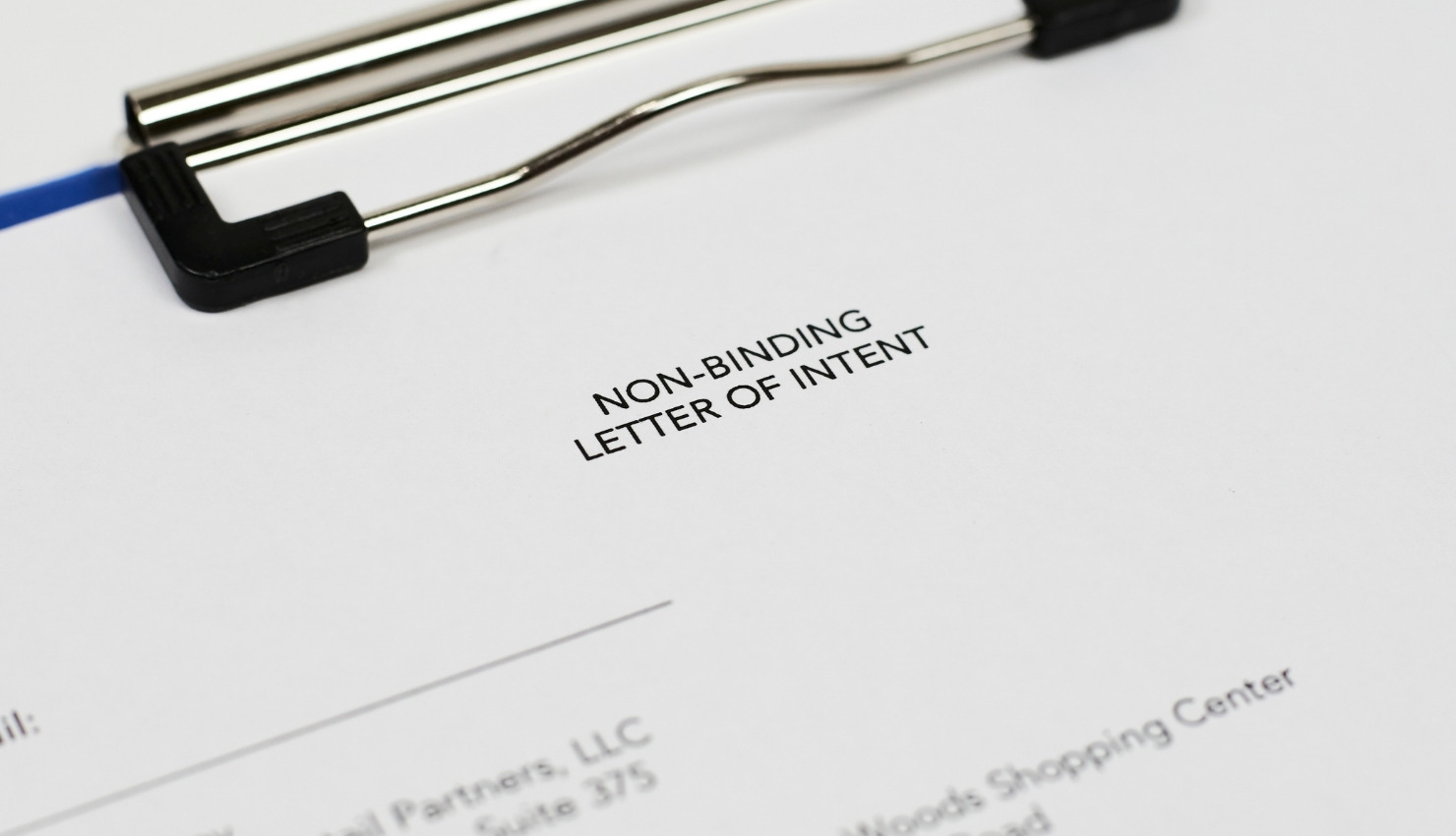
An LOI in commercial real estate is a preliminary document that summarizes the major terms of a proposed property sale or lease. In a leasing transaction, it serves as a bridge between selecting a property and negotiating the full lease. It gives the landlord, tenant, brokers, and attorneys a shared framework for the proposed transaction.
The LOI usually identifies the premises, intended use, rent structure, lease term, responsibility for improvements, security requirements, important dates, and conditions that must be satisfied before the parties move forward. It is shorter and less detailed than a lease. Its purpose is to determine whether the parties are aligned and to create a practical roadmap, not to address every default, remedy, insurance requirement, or legal risk.
LOI vs. Lease: What Is the Difference?
An LOI summarizes the proposed deal. A lease creates the detailed landlord-tenant relationship that governs possession, payment, operations, maintenance, compliance, defaults, remedies, transfers, and expiration. The LOI may fit in a few pages, while a commercial lease can be much longer because it converts business points into precise rights and obligations.
The LOI also creates a useful checkpoint. If the parties cannot agree on the core economics or operational requirements at this stage, they can pause before investing additional time and incurring further legal expenses. If they reach an agreement, the attorneys can use the LOI as a drafting guide. The tenant, broker, and attorney should then compare the lease draft with the LOI line by line. A favorable concession has little value if the final agreement omits it, narrows its scope, or makes it subject to new conditions.
Is a Letter of Intent Binding in Connecticut?
Do not assume that every LOI is nonbinding merely because of its title. The Connecticut Bar Association’s commercial real estate materials explain that whether a letter of intent is binding generally depends on the parties’ intent. That intent may be inferred from the document’s language, the circumstances surrounding the negotiations, the number and level of detail of the material terms addressed, the parties’ performance, and applicable custom.
An LOI may state that most of its terms are nonbinding while specifying that selected provisions, such as confidentiality, exclusivity, or cost allocation, are binding.
Connecticut General Statutes § 52-550 generally requires certain agreements to be in writing and signed, including agreements involving interests in real property and agreements that cannot be performed within one year. The statute also addresses limited circumstances involving oral leases of up to one year when the tenant takes possession. These requirements make careful wording and attorney review especially important in a multi-year commercial transaction.
A prudent practice is to state clearly which provisions, if any, bind the parties and when a binding lease will exist. A Connecticut commercial real estate attorney should review the LOI before signature and draft or review the final lease. A broker can negotiate business points and explain market context, but should not substitute for legal counsel.
What a Commercial Broker Should Help Negotiate Before the Lease

The strongest LOIs address the financial and operational terms that determine whether the property works for the tenant. The right structure depends on the building, market conditions, proposed use, landlord contribution, and the tenant’s financial profile.
1. Rent and Total Occupancy Cost
The LOI should identify the base rent, how the premises are measured, annual increases, and the lease structure. It should also specify responsibility for real estate taxes, insurance, common-area maintenance (CAM), utilities, and other operating expenses. If free rent or another abatement applies, define the amount, duration, and conditions. A lower base rent does not always mean a lower total occupancy cost.
Compare costs annually and across the full lease term. For example, base rent of $20 per square foot for 10,000 square feet equals $200,000 per year before taxes, insurance, CAM charges, utilities, rent increases, and build-out costs. This is only an illustration, but it shows why every major cost should be clearly defined.
2. Term Length and Renewal Options
Term length affects flexibility, long-term costs, and the landlord’s willingness to fund improvements. The LOI should identify the initial term, commencement trigger, expiration date (or method for determining it), and any renewal options. Renewal language should also define notice deadlines and how future rent will be calculated. An undefined renewal option can leave a significant financial issue unresolved.
3. Tenant Improvement Allowance
A tenant improvement (TI) allowance is the maximum amount the landlord will contribute toward approved build-out costs. The LOI should define the allowance amount, eligible expenses, payment or reimbursement process, required documentation, completion deadlines, and treatment of unused funds. Confirm exactly which costs qualify and when funds will be released.
4. Exclusivity and the Negotiation Window
A tenant may request a short exclusivity or no-shop period while the lease is finalized. The LOI should identify the space covered, the start and end dates, and any conditions that keep the restriction in effect. Retail and service tenants may also seek exclusive use to limit competing businesses. Define negotiation exclusivity and use exclusivity separately because they serve different purposes.
5. Contingencies and Approvals
Contingencies make the transaction dependent on specific conditions, such as zoning approval, financing, inspections, permits, environmental review, or attorney approval. The LOI should identify who is responsible, the deadline, the required documentation, and what happens if a condition is not met. Avoid vague language such as “subject to approvals” unless the approval process is clearly defined.
6. Delivery Condition
Delivery conditions define how the landlord will provide the premises. Terms such as “as is,” broom-clean, turnkey, or landlord-completed work create different expectations. The LOI should identify the required work, the condition of key building systems, remaining fixtures, and how delivery affects possession, build-out access, lease commencement, and rent commencement.
It should also explain how delivery will be documented and confirmed, such as through inspection rights, photographs, permits, certificates, or a signed delivery notice. If the tenant needs time for fit-out or equipment installation, establish separate dates for early access, lease commencement, and rent commencement.
7. Security Deposit
The LOI should state the security deposit amount, its permitted form, the due date, and any conditions for its reduction or release. When determining whether to request additional security or a guaranty, a landlord may consider the tenant’s credit, business history, investment in improvements, and lease term. The broker can help evaluate the request in relation to the deal’s economics, but legal counsel should review the final security deposit and guaranty provisions.
8. Timing and Deal Milestones
Set a realistic schedule for LOI acceptance, lease drafting, document revisions, due diligence, approvals, delivery, construction, opening, and rent commencement. Include an outside date when timing is critical. Clear milestones can help a Danbury office tenant coordinate a relocation or a New Milford warehouse tenant plan an equipment installation without treating an estimated delivery date as a guaranteed handover date.
How to Move From LOI to Final Lease in Five Steps

A disciplined handoff helps prevent the negotiated business deal from changing as documents become more detailed.
- Define the operational requirements. Confirm the use, space, utilities, access, parking, loading, signage, build-out, and opening timeline before discussing economics.
- Model the full cost. Compare base rent, escalations, pass-throughs, construction costs, deposits, and concessions rather than judging the deal by one rate.
- Negotiate the LOI. Record each material term clearly, identify binding provisions, and give every contingency or deadline a defined process.
- Involve counsel before signature. Ask a qualified attorney to review enforceability, legal risks, and any wording that could create an unintended obligation.
- Reconcile the lease against the LOI. Track every agreed point through drafting, due diligence, approvals, and final execution. Resolve inconsistencies before signing.
Frequently Asked Questions About Commercial Lease LOIs
What is an LOI in commercial real estate?
It is a preliminary summary of the main business terms for a proposed property sale or lease. For a lease, it helps the parties align on economics, operations, and timing before preparing the complete agreement.
Is a commercial lease LOI binding?
It depends on the wording, the parties’ intent, applicable law, and the surrounding facts. Many LOIs state that most provisions are nonbinding, yet certain clauses may bind the parties. Legal review should occur before signature.
Who usually prepares the letter of intent?
A commercial broker often prepares or negotiates the business framework, sometimes using a landlord or brokerage form. The parties’ attorneys should review the LOI and handle the final lease language.
Can lease terms change after the LOI?
Yes. Due diligence, legal review, new information, or unresolved details may lead to changes. However, reopening settled terms can delay the transaction. Document changes clearly and confirm that the final lease reflects the accepted deal.
How long does it take to go from LOI to lease?
There is no universal timeline. Property complexity, build-out negotiations, attorney availability, financing, municipal approvals, and the speed of document revisions all matter. The LOI should establish target dates without presenting uncertain approvals as guarantees.
Negotiate Stronger Lease Terms With Tower Realty Corp
The right commercial space must work financially and operationally, not only appear suitable during a property tour. Tower Realty Corp helps Connecticut businesses evaluate commercial properties, structure practical deal terms, and negotiate the business points that should be documented in a clear LOI. Consult a local commercial broker before committing to lease terms that may create unclear or unexpected long-term obligations.
Disclaimer: This article provides general educational information and does not constitute legal, tax, or financial advice. Commercial lease terms and legal outcomes depend on the specific documents, circumstances, and applicable law. Consult qualified Connecticut professionals before signing an LOI or commercial lease.